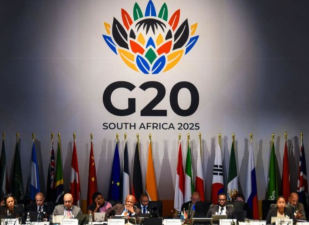
In 2025, the world stands at a crossroads of transformation, facing new challenges and opportunities in the political, economic, technological, and social spheres. From great power rivalry to technological breakthroughs, from economic recovery to social change, this year is destined to be extraordinary.The trajectory of conflicts in the Middle East is a focal point, including progress on the Israeli-Palestinian ceasefire, tensions along the Lebanese-Israeli border, the actions of the Houthi rebels in Yemen, and the regional power struggle following the regime change in Syria. Meanwhile, the possibility of peace talks in the Russia-Ukraine conflict and the foreign policy of the new US administration have also sparked widespread discussion. Furthermore, political upheavals in several countries, such as France, Germany, Japan, and South Korea, have created political uncertainty and become topics of public concern.
Ethics and Regulation of Artificial Intelligence
Artificial intelligence (AI) technology has made significant progress in recent years, particularly in natural language processing, computer vision, and automation. By 2025, AI applications will be more widespread, involving multiple industries such as healthcare, education, and finance. However, the ethical issues and regulatory challenges that follow will also become increasingly prominent. How to ensure the transparency, fairness, and protection of personal privacy in AI will become urgent issues for all sectors of society to address.
International Politics: A Blend of Rivalry and Uncertainty
- Trump Returns to the White House
On January 20, 2025, Trump will be sworn in as the 47th President of the United States. His policy platform focuses on energy, immigration, and trade protectionism. He announced the termination of electric vehicle incentives, the expansion of traditional energy extraction, and plans to impose tariffs on imported products, sparking global concerns about trade friction. Furthermore, Trump's "America First" foreign policy, including pushing for negotiations in the Russia-Ukraine conflict and demanding that NATO member states increase military spending, has further exacerbated the uncertainty in international relations.
- A Turning Point in the Russia-Ukraine Conflict
As the Trump administration hinted at reducing aid to Ukraine, both Russia and Ukraine signaled a willingness to negotiate. Ukrainian President Zelensky stated that the conflict could end in 2025, but disagreements over territorial sovereignty and NATO membership remain key obstacles. Analysts believe that if negotiations begin, the European security landscape could be reshaped.
- Brief Easing of Tensions in the Middle East and Potential Risks
On January 15, Israel and Hamas reached a ceasefire agreement, including the exchange of detainees and the gradual withdrawal of Israeli troops from Gaza. However, Israel's insistence on maintaining a military presence in the "Philadelphia Corridor" in southern Gaza has sown the seeds for future conflicts.
Digital Currency and the Transformation of Fintech
With the piloting and rollout of central bank digital currencies (CBDCs) in various countries, 2025 may witness a major transformation in the fintech sector. The widespread adoption of digital currencies will transform the traditional financial system, impacting payment methods, cross-border transactions, and the implementation of monetary policy. Simultaneously, the application of blockchain technology will promote transparency and security, driving innovation and development in the financial industry. However, regulatory issues and security risks associated with digital currencies will remain pressing challenges.
Social Mental Health Issues
Following the impact of the global pandemic, mental health issues have garnered increasing attention. By 2025, societal emphasis on mental health will further increase, with related policies, services, and education continuously improving. Eliminating the stigma surrounding mental health, raising public awareness of mental health, and providing better support for those in need will become common goals for all sectors of society.